publications
publications by categories in reversed chronological order. generated by jekyll-scholar.
2026
- A portable and flexible intermediary patch for in vivo magnetic localizationPingyu Xiang, Danying Sun, Guoyao Ma, and 5 more authorsNature Sensors, Feb 2026
Safe operation in visually obstructed anatomy relies on accurate in vivo localization of medical devices, yet current magnetic systems struggle to adapt across device types and clinical environments. Here we present a portable and flexible patch that functions as an intermediary in a dual-stage localization paradigm of a source-sensors-source configuration, enabling three-dimensional localization in vivo with mean positional errors under 300 micrometres and orientation errors under 0.3 degrees. The patch can be customized in shape and size to accommodate diverse medical scenarios requiring precise localization. We validate its flexibility and versatility through systematic characterization, and through in vitro and in vivo studies in vascular and gastrointestinal surgery, where the system maintained continuous magnetic capsule tracking for 6 hours. Our magnetic localization patch could potentially broaden the compatibility and adaptability of magnetic localization across various medical applications.
@article{xiang2026portable, title = {A portable and flexible intermediary patch for in vivo magnetic localization}, author = {Xiang, Pingyu and Sun, Danying and Ma, Guoyao and Zhang, Hongye and Xiong, Rong and Wang, Yue and Lu, Haojian and Xu, Tiantian}, journal = {Nature Sensors}, volume = {1}, number = {2}, pages = {181--193}, year = {2026}, month = feb, doi = {10.1038/s44460-025-00017-9}, } - Analysis and mitigation of pose estimation uncertainty on SE (3) for magnetic localizationPingyu Xiang, Hongye Zhang, Yue Wang, and 2 more authorsIEEE Transactions on Robotics, May 2026

Magnetic localization, owing to its immunity to line-of-sight occlusion and noncontact nature, is considered a promising technology for medical applications. While it is intuitive that localization performance degrades as the target moves farther from the sensor array, uncertainty analysis has long been overlooked, which is essential for quantifying localization quality. In this work, we present a pose estimation and uncertainty analysis framework on SE(3) for magnetic source localization using sensor arrays, which enables concise formulation of the problem and quantitative assessment of the results. The volume of the uncertainty ellipsoid is used to characterize localization confidence, while the surface shape in Cartesian space is used for visualization. This also provides insight into the effective workspace of the magnetic localization system prior to deployment. Guided by this analysis, we designed a movable magnetic sensor array to expand the limited sensing volume and mitigate localization uncertainty, thereby enhancing overall localization performance. Simulations and pose tracking experiments validate the effectiveness of this framework. By dynamically moving the sensor array to minimize the volume of the uncertainty ellipsoid, localization errors are reduced compared with static and projection-based strategies by 67.04%, 16.51% in position and 43.87%, 20.73% in orientation, respectively. Furthermore, phantom experiments on distal locking screw alignment and magnetic capsule endoscope tracking demonstrate the system’s capability in improving localization accuracy (reducing alignment errors by 71.88%) and expanding the effective workspace by several folds.
@article{xiang2026analysis, title = {Analysis and mitigation of pose estimation uncertainty on SE (3) for magnetic localization}, author = {Xiang, Pingyu and Zhang, Hongye and Wang, Yue and Xiong, Rong and Lu, Haojian}, journal = {IEEE Transactions on Robotics}, volume = {42}, pages = {2178 - 2195}, year = {2026}, publisher = {IEEE}, month = may, doi = {10.1109/TRO.2026.3691220}, } - Enhancing shape sensing of slender medical continuum robot using carbon nanotube piezoresistive fiber bandagePingyu Xiang, Xiangyu Mi, Hongye Zhang, and 6 more authorsCyborg and Bionic Systems, 2026
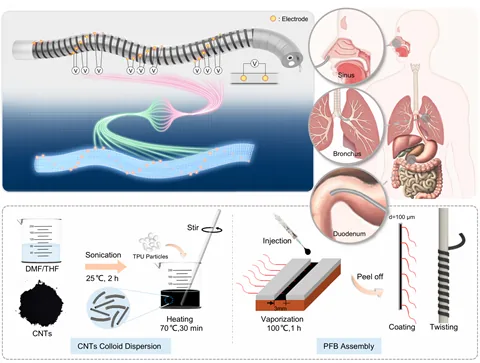
Slender medical continuum robots with flexibility and highly redundant degrees of freedom are widely used in various minimally invasive surgery. However, when interacting with anatomical structures, the continuum robot adopts diverse shapes, posing challenges for operation and control. To achieve real-time intraoperative shape sensing and provide online guidance for manipulation, most existing methods rely on optical fibers embedded within the robot, which often require specialized robot designs and come with high costs. Here, we present a novel approach utilizing thin and flexible carbon nanotube piezoresistive fibers as a bandage, helically integrated on the surface of existing slender medical continuum robots for shape sensing. The spatial configuration of the robot is effectively inferred by downsampling the resistance changes along the robot’s body and applying a learning-based method. The results demonstrate that the proposed helically arranged carbon nanotube piezoresistive fibers, combined with a data-driven approach, are capable of reconstructing the robot’s spatial shape. In vitro and ex vivo experiments on animal tissues further highlight its promising potential for enhancing the shape-sensing ability of existing medical continuum robots.
@article{xiang2026enhancing, title = {Enhancing shape sensing of slender medical continuum robot using carbon nanotube piezoresistive fiber bandage}, author = {Xiang, Pingyu and Mi, Xiangyu and Zhang, Hongye and Wang, Fei and Yang, Xiong and Wang, Yue and Xiong, Rong and Liu, Song and Lu, Haojian}, journal = {Cyborg and Bionic Systems}, volume = {7}, pages = {0622}, year = {2026}, doi = {10.34133/cbsystems.0622}, } - Shape sensing and tip tracking via reciprocating magnet in the soft continuum robotPingyu Xiang, Zexi Zhao, Hongye Zhang, and 3 more authorsIn 2026 IEEE International Conference on Robotics and Automation (ICRA), 2026
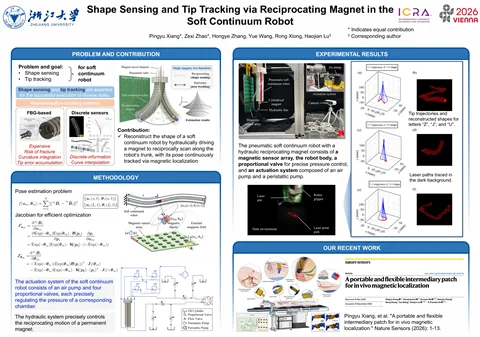
Soft continuum robots, attributable to inherently compliant trunks and shape manipulability, have been widely deployed in complex scenarios requiring safe human-robot interaction. However, their nonlinear deformations and hyperredundant degrees of freedom pose substantial challenges for full-body shape sensing and closed-loop control of the end effector. A low-cost yet accurate feedback solution is thus highly desirable. To address this, we present a hydraulic driven reciprocating magnet strategy, integrated with magnetic localization, to enable both shape sensing and tip pose estimation of soft continuum robots, thereby facilitating precise closed-loop control. The proposed approach time-multiplexes a single magnet under different operational phases to fulfill two functions: full-body shape reconstruction and tip pose tracking. We validate the effectiveness of the reciprocating magnet system on a pneumatic manipulator prototype with two active degrees of freedom. Experimental results show that the magnet can travel through the guide channel at a maximum speed of 6.5 cm/s, achieving average errors of less than 2 mm in position (1.1% of the robot’s length), 3° in orientation for shape sensing and tip pose estimation. Using this sensing strategy, we demonstrate a simple closed-loop control on the soft continuum robot. Owing to its simplicity, low cost, and high precision, the proposed method holds promise as a practical alternative for state feedback in soft continuum robots.
@inproceedings{xiang_icra2026, title = {Shape sensing and tip tracking via reciprocating magnet in the soft continuum robot}, author = {Xiang, Pingyu and Zhao, Zexi and Zhang, Hongye and Wang, Yue and Xiong, Rong and Lu, haojian}, booktitle = {2026 IEEE International Conference on Robotics and Automation (ICRA)}, pages = {1-8}, year = {2026}, organization = {IEEE}, doi = {}, } - IEEE T-IM
 A Contact-Model-Guided Visuotactile Sensor Enabling Simultaneous Measurement of Hardness and Tactile InformationXiangyu Mi, Ke Qiu, Pingyu Xiang, and 5 more authorsIEEE Transactions on Instrumentation and Measurement, 2026
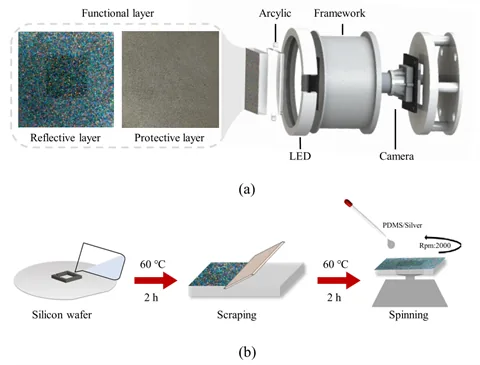
Haptics plays a crucial role in enabling robots to achieve safe and coordinated interactions with their surroundings. Among the diverse range of tactile sensors, visuotactile sensors have emerged as leading candidates for sophisticated fingertip sensing applications due to their high resolution and capability to perceive multimodal tactile information. However, current visuotactile sensors face limitations in durability and the ability to rapidly measure multiple tactile information simultaneously during brief contact, similar to human touch. We propose a visuotactile sensor guided by contact models, through our investigation of Hertzian contact and planar contact. Specifically, the contact model has revealed the relationship between contact force, depth, area, and the hardness of the contacting objects under contact objects of varying shapes. By embedding these physical priors into a fitting framework, our method avoids data-intensive learning, enabling real-time, simultaneous estimation of 3-axis force, deformation depth, and Shore A hardness. For three tests on the same object, the average error in normal force is around 1.3 N, and the root-mean-square error in hardness is 7.656 on the Shore A scale. At the same time, we have enhanced the material and processing methods of the visuotactile sensor’s functional layer to improve its stability and durability, so that it can be adapted to objects of various hardness.
@article{mi2026contact,
  title = {A Contact-Model-Guided Visuotactile Sensor Enabling Simultaneous Measurement of Hardness and Tactile Information},
  author = {Mi, Xiangyu and Qiu, Ke and Xiang, Pingyu and Wang, Shudong and Xiong, Rong and Wang, Yue and Yu, Xiazhen and Lu, Haojian},
  journal = {IEEE Transactions on Instrumentation and Measurement},
  year = {2026},
  publisher = {IEEE},
  doi = {10.1109/TIM.2026.3667306},
}

2025
- SmartBot
 A comprehensive review of humanoid robotsQincheng Sheng, Zhongxiang Zhou, Jinhao Li, and 8 more authorsSmartBot, 2025
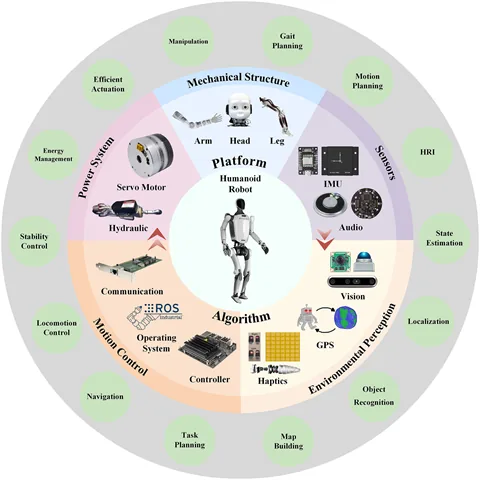
Humanoid robots, increasingly recognized for their potential to drive economic and social development, have garnered significant attention in recent years. This paper aims to provide a comprehensive overview of the progress, challenges, and future directions in humanoid robotics, with a particular emphasis on essential system components and key technological innovations. Through a review of historical milestones, this paper explores critical aspects such as the design of the head and body, and examines state-of-the-art technologies in areas like locomotion control, perception, and intelligent manipulation. By presenting a thorough analysis of the field, this work aims to serve as a valuable resource for researchers and inspire future innovations that will drive the continued evolution of humanoid robots.
@article{sheng2025comprehensive, title = {A comprehensive review of humanoid robots}, author = {Sheng, Qincheng and Zhou, Zhongxiang and Li, Jinhao and Mi, Xiangyu and Xiang, Pingyu and Chen, Zhenghan and Xu, Haocheng and Jia, Shenhan and Wu, Xiyang and Cui, Yuxiang and others}, journal = {SmartBot}, volume = {1}, number = {1}, pages = {e12008}, year = {2025}, publisher = {Wiley Online Library}, doi = {10.1002/smb2.12008}, } - IEEE RA-L
 Deformation Configuration Estimation for Soft Continuum Robot Utilizing Seq2Seq LearningHongye Zhang, Jingyu Zhang, Pingyu Xiang, and 5 more authorsIEEE Robotics and Automation Letters, 2025
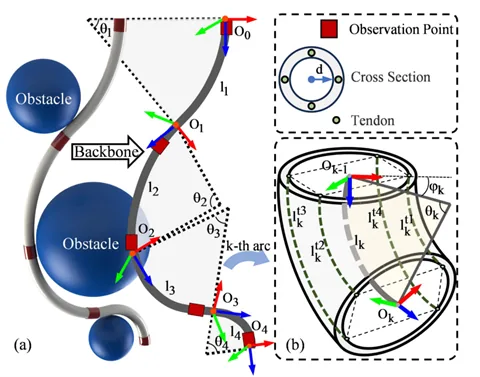
Inspired by biological tentacles, soft continuum robots exhibit the potential for navigating through narrow spaces and operating in complex environments, offering extensive application possibilities. However, owing to their inherent compliance, soft continuum robots may undergo unpredictable deformations in complex environments, leading to alterations in the whole-body configurations and diminished control precision. To address the problem, this letter employs sequence-to-sequence (Seq2Seq) learning to estimate the deformation of a tendon-driven continuum robot under multi-point contact. We also introduce a streamlined approach utilizing self-organizing mapping (SOM) to obtain ground truth data for training purposes and design dynamic loss functions for two-stage training, thereby facilitating neural network optimization in terms of both speed and precision. Furthermore, a soft continuum robot with two actively controlled degrees of freedom made of silicone is fabricated to verify the performance of the proposed method. The results show a shape estimation error of 2.94 mm (1.23% of the robot length).
@article{zhang2025deformation,
  title = {Deformation Configuration Estimation for Soft Continuum Robot Utilizing Seq2Seq Learning},
  author = {Zhang, Hongye and Zhang, Jingyu and Xiang, Pingyu and Qiu, Ke and Fang, Qin and Wang, Yue and Xiong, Rong and Lu, Haojian},
  journal = {IEEE Robotics and Automation Letters},
  volume = {10},
  number = {12},
  pages = {13280--13287},
  year = {2025},
  publisher = {IEEE},
  doi = {10.1109/LRA.2025.3629975},
}
2024
- Nat. Commun.
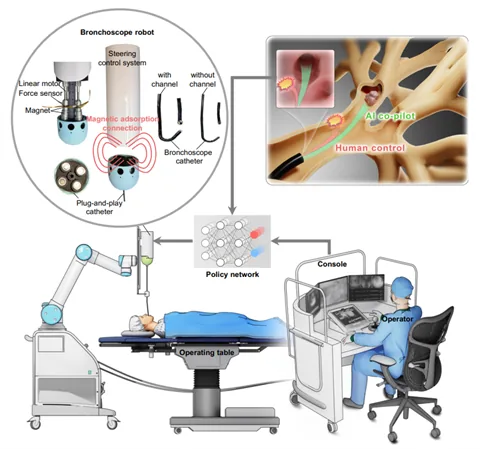 AI co-pilot bronchoscope robotJingyu Zhang, Lilu Liu, Pingyu Xiang, and 7 more authorsNature communications, 2024
The unequal distribution of medical resources and scarcity of experienced practitioners confine access to bronchoscopy primarily to well-equipped hospitals in developed regions, contributing to the unavailability of bronchoscopic services in underdeveloped areas. Here, we present an artificial intelligence (AI) co-pilot bronchoscope robot that empowers novice doctors to conduct lung examinations as safely and adeptly as experienced colleagues. The system features a user-friendly, plug-and-play catheter, devised for robot-assisted steering, facilitating access to bronchi beyond the fifth generation in average adult patients. Drawing upon historical bronchoscopic videos and expert imitation, our AI-human shared control algorithm enables novice doctors to achieve safe steering in the lung, mitigating misoperations. Both in vitro and in vivo results underscore that our system equips novice doctors with the skills to perform lung examinations as expertly as seasoned practitioners. This study offers innovative strategies to address the pressing issue of medical resource disparities through AI assistance.
@article{zhang2024ai, title = {AI co-pilot bronchoscope robot}, author = {Zhang, Jingyu and Liu, Lilu and Xiang, Pingyu and Fang, Qin and Nie, Xiuping and Ma, Honghai and Hu, Jian and Xiong, Rong and Wang, Yue and Lu, Haojian}, journal = {Nature communications}, volume = {15}, number = {1}, pages = {241}, year = {2024}, publisher = {Nature Publishing Group UK London}, doi = {10.1038/s41467-023-44385-7}, } - Learning the inverse kinematics of magnetic continuum robot for teleoperated navigationPingyu Xiang, Ke Qiu, Danying Sun, and 8 more authorsIn 2024 IEEE/RSJ International Conference on Intelligent Robots and Systems (IROS), 2024
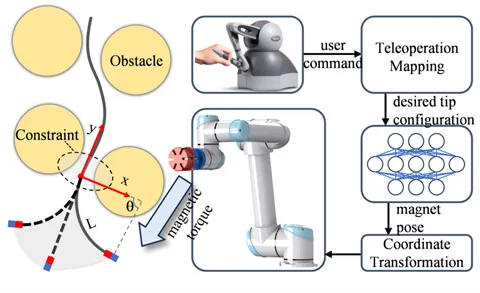
Magnetic continuum robots are subject to external magnetic fields and deformed remotely, simplifying the robot’s transmission mechanism and providing it with significant potential for miniaturization and operational flexibility. However, modeling magnetic field distribution generated by permanent magnets is complex and requires time-consuming pre-calibrations. Moreover, it is highly susceptible to environments with ferromagnetic materials, posing significant challenges for the control of magnetic continuum robots. In response, we propose an approach that does not overly focus on the magnetic field distribution but instead directly learns the inverse kinematics of magnetic continuum robots end-to-end. Binding the robot’s configuration to the pose of external magnets, precise control of continuum robots is facilitated. Additionally, we leverage teleoperation techniques to broaden the applicability of this method. By mounting magnets on a robotic arm and directly utilizing the target pose of the external magnet predicted by a multi-layer perceptron (MLP), we achieve the operation and navigation of magnetic continuum robots in complex environments. Experiments demonstrate that the mean control accuracy along the robot using our learning-based inverse kinematics is about half of the robot’s diameter.
@inproceedings{xiang2024learning,
  title = {Learning the inverse kinematics of magnetic continuum robot for teleoperated navigation},
  author = {Xiang, Pingyu and Qiu, Ke and Sun, Danying and Zhang, Jingyu and Fang, Qin and Mi, Xiangyu and Wang, Shudong and Chen, Mengxiao and Wang, Yue and Xiong, Rong and and Lu, Haojian},
  booktitle = {2024 IEEE/RSJ International Conference on Intelligent Robots and Systems (IROS)},
  pages = {13070--13075},
  year = {2024},
  organization = {IEEE},
  doi = {10.1109/IROS58592.2024.10801526},
}
2023
- Learning-based high-precision force estimation and compliant control for small-scale continuum robotPingyu Xiang, Jingyu Zhang, Danying Sun, and 6 more authorsIEEE Transactions on Automation Science and Engineering, 2023
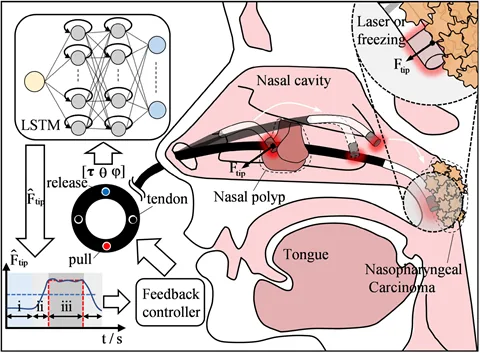
Small-scale continuum robot-assisted minimally invasive surgery has received crucial attention due to its smaller incisions and high dexterity. In medical scenarios such as radiofrequency ablation and nasal/throat swab sampling, monitoring and controlling the forces applied to human tissue can help improve the safety and comfort level of the procedure. However, the tip-sensor-based force detection method can barely be deployed due to the miniature size of the continuum robot; meanwhile, the mechanical modeling-based high-precision force estimation cannot be realized on account of the continuum robots’ complex structure with high nonlinear properties. To address the high-precision force estimation challenge for further compliant control during minimally invasive interventions, a learning-based high-precision force estimation method via long short-term memory (LSTM) is proposed in this paper. On this basis, compliance control and high-precision force tracking can be further realized for small-scale continuum robot. The compliance control ensures a smooth and stable transition during the interaction between the robot and the environment, and force tracking can be utilized for maintaining or precisely controlling the force applied to the human tissue. Finally, the contact force sensing and control experiments are carried out on a small-scale continuum robot system prototype, and a demonstration using a human nasal cavity model is conducted. The results validate that the proposed LSTM neural network fits the mechanical model of the continuum robot well with the root mean square error of 3.44mN, and the control method can significantly compensate for the instantaneous impact during contact with an attenuation of 59.3% and rapidly respond to keep the force accurately at the expected value with the mean absolute error of 2.41mN. Note to Practitioners—This research is motivated by the increasing number of applications for small-scale continuum robot-assisted minimally invasive interventional surgery, such as radiofrequency ablation, biopsy, and endoscopic submucosal dissection. These surgeries require high-precision contact force sensing and control. However, due to the small size and complex structure of the continuum robot, traditional methods such as installing force sensors and mechanical modeling are not effective. Therefore, this paper utilizes a neural network to infer contact force through more accessible information about the robot, such as the tension of the actuators. This method allows for compliant force control during the dynamic contact between the small-scale continuum robot and human tissue. Experiments conducted on a human nasal cavity model demonstrate that the proposed method can improve the safety and reliability of small-scale continuum robot-assisted minimally invasive surgery.
@article{xiang2023learning, title = {Learning-based high-precision force estimation and compliant control for small-scale continuum robot}, author = {Xiang, Pingyu and Zhang, Jingyu and Sun, Danying and Qiu, Ke and Fang, Qin and Mi, Xiangyu and Wang, Yue and Xiong, Rong and Lu, Haojian}, journal = {IEEE Transactions on Automation Science and Engineering}, volume = {21}, number = {4}, pages = {5389--5401}, year = {2023}, publisher = {IEEE}, doi = {10.1109/TASE.2023.3311179}, } - Image-guided teleoperation for soft bronchoscopy robotPingyu Xiang, Jingyu Zhang, Yue Wang, and 2 more authorsIn 2023 IEEE international conference on unmanned systems (ICUS), 2023
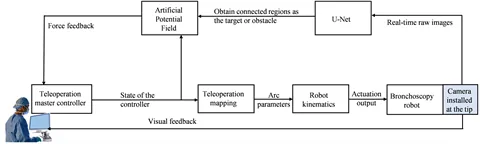
Currently, the majority of traditional bronchoscopes require skilled doctors to manually insert them through the patient’s nose or mouth into the airway, where a slight mistake can lead to severe consequences like tracheal perforation or pneumothorax. In order to address this issue, This paper introduces a soft bronchoscopy robot designed to align with human intuition during operation. By employing U-Net to process the image of the airway, a method based on artificial potential fields is proposed, which introduces a force feedback mechanism to intervene in the operator’s actions, thereby enhancing the safety and reliability of bronchoscopy procedures performed remotely. The presented robotic system and approach are validated for safety and reliability on a human lung bronchial model.
@inproceedings{xiang2023image,
  title = {Image-guided teleoperation for soft bronchoscopy robot},
  author = {Xiang, Pingyu and Zhang, Jingyu and Wang, Yue and Xiong, Rong and Lu, Haojian},
  booktitle = {2023 IEEE international conference on unmanned systems (ICUS)},
  pages = {807--811},
  year = {2023},
  organization = {IEEE},
  doi = {10.1109/ICUS58632.2023.10318379},
}